 Sarah Bakewell
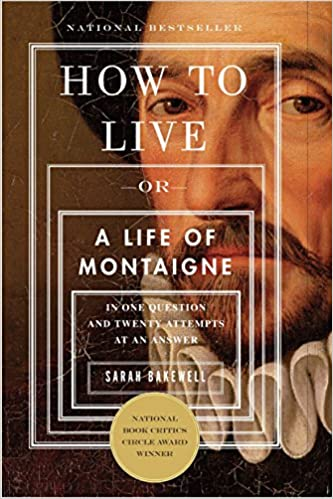
How to Live, or A Life of Montaigne
Sarah Bakewell's writing in this thoroughly pleasurable book is as graceful, elegant, and balanced as that of the renowned essayist she so successfully elucidates and interprets. Blackwell takes her title as a question to which Montaigne proposed varying answers, which constitute the titles of her twenty chapters: "Question everything"; "Do something no one has done before"; "Philosophize only by accident"; and — for me the most important (that may differ for every reader) — "Pay attention." "Montaigne presents himself," writes Bakewell, "as someone who jotted down whatever was going through his head when he picked up his pen. . . . He wanted to know how to live a good life — a correct [and] honorable life, but also a fully human, satisfying one. This drove him both to write and to read."
One purchaser of the book, she recounts, describes it as "not so much a book as a companion for life." And it is a more engaging companion because, as Blackwell notes, Montaigne "was delighted to see his work come out unpredictably"; "he never worries if he has said one thing on one page and the opposite even in the next sentence." He usually responded to questions, she notes, with further questions; he appended "though I don't know" to many of his observations. "Writing," says Bakewell, "taught Montaigne to look at the world more closely"; reading Montaigne, and this book, can perhaps help one live — and certainly think, and reflect — more thoughtfully, and with more grace.
|